Buy gt3treff.eu ?
We are moving the project
gt3treff.eu .
Are you interested in purchasing the domain
gt3treff.eu ?
domain@kv-gmbh.de · 0541-91531010
Buy gt3treff.eu ?
What is kinematic physics?
Kinematic physics is the branch of physics that deals with the motion of objects without considering the forces that cause the motion. It focuses on describing the position, velocity, and acceleration of objects as they move through space and time. Kinematic equations are used to analyze and predict the motion of objects, and they are essential for understanding the behavior of moving bodies in various physical systems. This branch of physics is fundamental for understanding the basic principles of motion and is often a starting point for studying more complex topics in physics. **
How do you establish kinematic constraints?
Kinematic constraints are established by defining the relationships between the motion of different parts of a system. This can be done by specifying the allowable range of motion for each part, as well as any restrictions on their relative positions or velocities. Kinematic constraints can also be implemented through mathematical equations that describe the relationships between the motion variables of the system. By carefully defining these constraints, we can accurately model the behavior of the system and predict its motion under different conditions. **

Similar search terms for Kinematic
Top-Angebote
Products related to Kinematic:
-
HOMCOM AIYAPLAY 12V Kids Quad Bike w/ 4 Suspension Wheels, for 3-5 Years Green 1Explore the great outdoors with the AIYAPLAY kids quad bike! Tackle any terrain, from grass to asphalt, with its robust treaded wheels and suspension. Plus, a handy storage basket at the back keeps toys, snacks and other essentials close. Adventure awaits at the push of a pedal, with speeds up to 6km/h. ● Treaded wheels with suspension for smooth rides on different terrains; ● Back basket for keeping toys and other essentials; ● Foot pedal accelerator allows speeds between 3-6km/h; ● Equipped with four headlights, music and a USB port for entertainment; ● Two 12V motors support forward and reverse functions; ● Realistic features foster imagination and adventurous play; ● Assembly required; ●Colour: Yellow; ● Material: Plastic and metal; ● Overall dimensions: 57.5H x 88L x 50Wcm; ● Seat: 22.5W x 11Dcm; ● Seat height: To floor: 33cm; ● Battery: 12V 4.5AH; ● Motor: 2 x 12V, 25W; ● First charge: 6-8 hours. Regular charge: 8-12 hours; ●Run time: 45 minutes; ● Speed: 3-6km/h; ● Weight capacity: 30kg; ● Approved age: 3 years; ● Recommended age: 3-5 years; ● Seat capacity: One rider; ● Item label: 370-377V70YL; ● Always monitory your child while they are riding; ● Kids must wear a helmet while driving; HOMCOM Colour: Green95,99 £*Shipping: 0,00 £Secure redirect to the provider
-
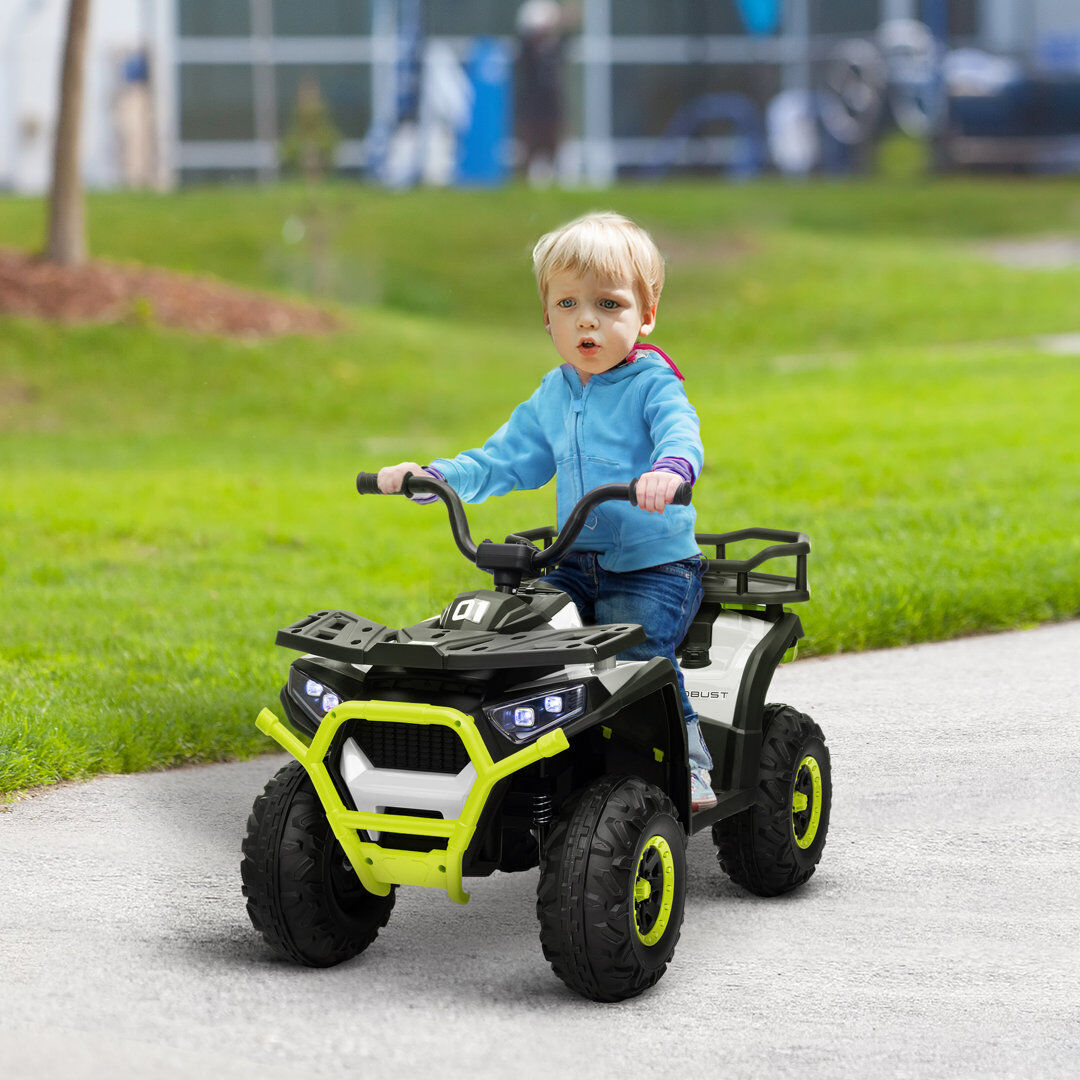
HOMCOM AIYAPLAY 12V Kids Quad Bike w/ 4 Suspension Wheels, for 3-5 Years Yellow 1Explore the great outdoors with the AIYAPLAY kids quad bike! Tackle any terrain, from grass to asphalt, with its robust treaded wheels and suspension. Plus, a handy storage basket at the back keeps toys, snacks and other essentials close. Adventure awaits at the push of a pedal, with speeds up to 6km/h. ● Treaded wheels with suspension for smooth rides on different terrains; ● Back basket for keeping toys and other essentials; ● Foot pedal accelerator allows speeds between 3-6km/h; ● Equipped with four headlights, music and a USB port for entertainment; ● Two 12V motors support forward and reverse functions; ● Realistic features foster imagination and adventurous play; ● Assembly required; ●Colour: Yellow; ● Material: Plastic and metal; ● Overall dimensions: 57.5H x 88L x 50Wcm; ● Seat: 22.5W x 11Dcm; ● Seat height: To floor: 33cm; ● Battery: 12V 4.5AH; ● Motor: 2 x 12V, 25W; ● First charge: 6-8 hours. Regular charge: 8-12 hours; ●Run time: 45 minutes; ● Speed: 3-6km/h; ● Weight capacity: 30kg; ● Approved age: 3 years; ● Recommended age: 3-5 years; ● Seat capacity: One rider; ● Item label: 370-377V70YL; ● Always monitory your child while they are riding; ● Kids must wear a helmet while driving; HOMCOM Colour: Yellow97,99 £*Shipping: 0,00 £Secure redirect to the provider
-
Baby Jogger Performance Series 16" Wheels in RedLifetime warranty on frame; One year warranty on soft goods and wheels; No tools necessary for assembly; Easy folding; 100 lbs weight capacity; Machine washable seat, canopy and basket fabric; Safety wrist strap;249,99 $*Shipping: 0,00 $Secure redirect to the provider
-
Natural Light 10 Inch Exhaust Fan KitAdd an exhaust vent to the Natural Light Tubular SKyllight with the Natural Light Exhaust Vent Kit that features a tranquil motor capable of exhausting 125 cfm. It is perfect for bathrooms and laundry rooms and incorporates a sleek light fixture...374,09 $*Shipping: 0,00 $Secure redirect to the provider


-
How do you set up kinematic constraints?
To set up kinematic constraints, you first need to identify the relationship between the objects or parts that you want to constrain. Then, you can use software tools such as CAD programs or physics engines to define the constraints based on this relationship. Common types of kinematic constraints include revolute joints, prismatic joints, and fixed joints, which restrict the motion of the objects in specific ways. By applying these constraints, you can simulate realistic movements and interactions between the objects in your system. **
-
How do you achieve the kinematic relationship?
The kinematic relationship can be achieved by understanding the motion and position of objects in a system. This involves analyzing the velocity, acceleration, and displacement of the objects over time. By using mathematical equations and principles of physics, such as the equations of motion and Newton's laws, the kinematic relationship can be determined. Additionally, experimental data and observations can be used to validate and refine the kinematic relationship. **
-
How can one reach the kinematic relationship 3?
To reach the kinematic relationship 3, one can use the principles of kinematics to analyze the motion of objects. This involves studying the position, velocity, and acceleration of the objects and using equations and formulas to establish the relationships between these variables. Additionally, one can use graphical methods, such as velocity-time and position-time graphs, to visualize and understand the kinematic relationships. Finally, conducting experiments and collecting data can help to validate and confirm the kinematic relationships. **
-
What is the solution method for kinematic problems in physics?
The solution method for kinematic problems in physics involves using the equations of motion to analyze the motion of an object. These equations include the equations for constant velocity, constant acceleration, and projectile motion. By identifying the known and unknown variables, such as initial velocity, final velocity, acceleration, displacement, and time, we can use the appropriate equation to solve for the unknown variable. It is important to carefully consider the given information and choose the correct equation to use in order to accurately solve kinematic problems in physics. **

Can you help me with a kinematic problem in physics?
Yes, I can help you with a kinematic problem in physics. Kinematics deals with the motion of objects without considering the forces that cause the motion. If you provide me with the specific details of the problem, such as the initial and final positions, velocities, accelerations, and time, I can help you solve for the unknown quantities using the kinematic equations. Feel free to ask me any specific questions you have about the problem, and I'll do my best to assist you. **
Could someone explain or break down the transformation of this kinematic formula for me?
Sure! The kinematic formula that describes the relationship between initial velocity (u), final velocity (v), acceleration (a), and displacement (s) is given by the equation: v^2 = u^2 + 2as. This formula can be derived from the equations of motion by using the equation v = u + at and the equation s = ut + (1/2)at^2. By substituting the expression for t from the first equation into the second equation and then substituting the resulting expression for s into the equation v = u + at, we can arrive at the kinematic formula v^2 = u^2 + 2as. This formula is commonly used to solve problems involving motion under constant acceleration. **
Top-Angebote
Products related to Kinematic:
-
Ivy Bronx AIYAPLAY 12V Aston Martin Licensed Electric Go Kart w/ 4 Suspension Wheels Green 1Zoom into fun with the Aston Martin Cognizant Aramco F1 Team AMR23 Licensed 12V go kart! Feel the thrill with its strong power and smooth ride on brick roads or short grass. Opt for remote control or let your child take the wheel, enjoying speeds up to 5 km/h, complete with interactive horn, music and lights. Ivy Bronx143,99 £*Shipping: 0,00 £Secure redirect to the provider
-
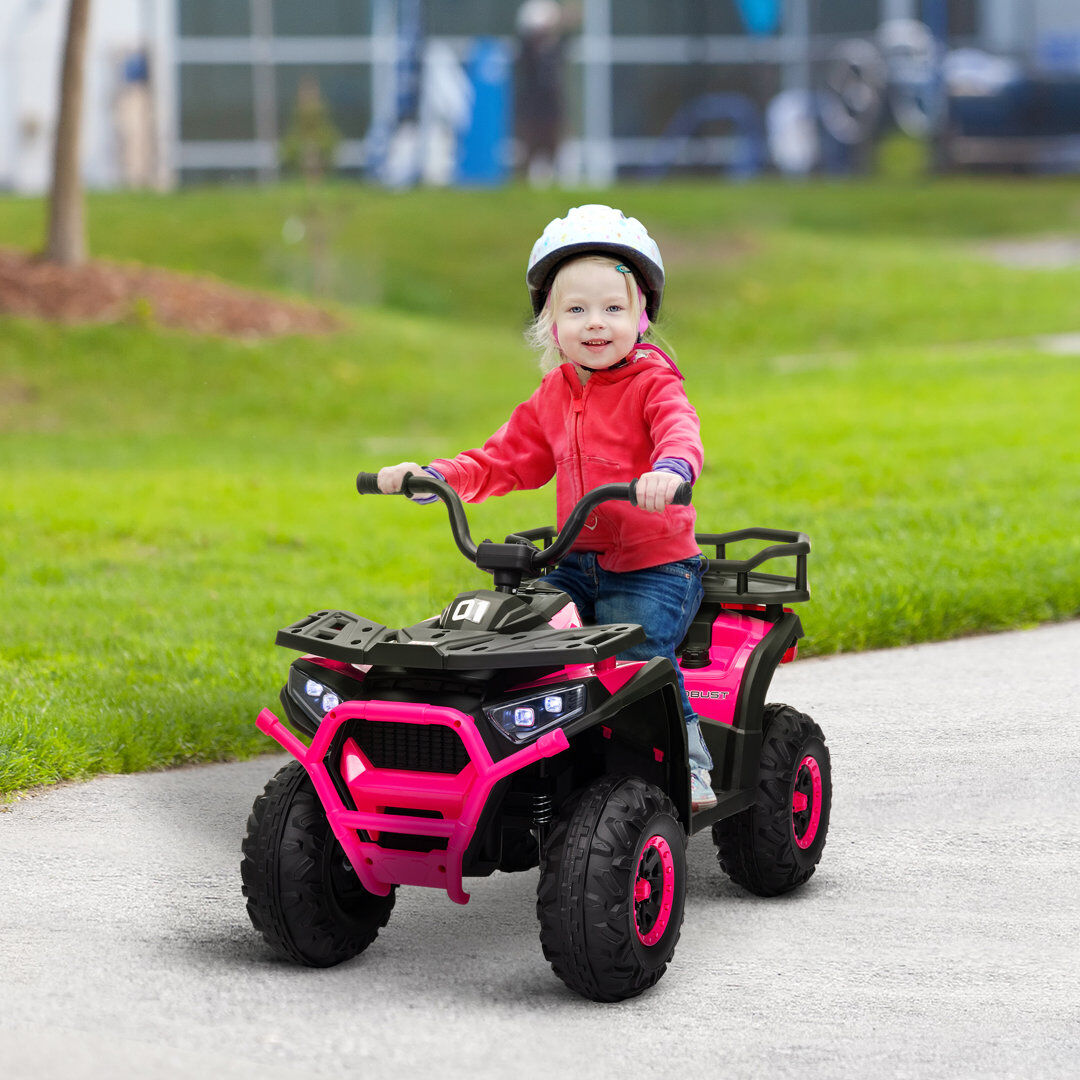
HOMCOM AIYAPLAY 12V Kids Quad Bike w/ 4 Suspension Wheels, for 3-5 Years Pink 1Explore the great outdoors with the AIYAPLAY kids quad bike! Tackle any terrain, from grass to asphalt, with its robust treaded wheels and suspension. Plus, a handy storage basket at the back keeps toys, snacks and other essentials close. Adventure awaits at the push of a pedal, with speeds up to 6km/h. ● Treaded wheels with suspension for smooth rides on different terrains; ● Back basket for keeping toys and other essentials; ● Foot pedal accelerator allows speeds between 3-6km/h; ● Equipped with four headlights, music and a USB port for entertainment; ● Two 12V motors support forward and reverse functions; ● Realistic features foster imagination and adventurous play; ● Assembly required; ●Colour: Yellow; ● Material: Plastic and metal; ● Overall dimensions: 57.5H x 88L x 50Wcm; ● Seat: 22.5W x 11Dcm; ● Seat height: To floor: 33cm; ● Battery: 12V 4.5AH; ● Motor: 2 x 12V, 25W; ● First charge: 6-8 hours. Regular charge: 8-12 hours; ●Run time: 45 minutes; ● Speed: 3-6km/h; ● Weight capacity: 30kg; ● Approved age: 3 years; ● Recommended age: 3-5 years; ● Seat capacity: One rider; ● Item label: 370-377V70YL; ● Always monitory your child while they are riding; ● Kids must wear a helmet while driving; HOMCOM Colour: Pink112,99 £*Shipping: 0,00 £Secure redirect to the provider
-
HOMCOM AIYAPLAY 12V Kids Quad Bike w/ 4 Suspension Wheels, for 3-5 Years Green 1Explore the great outdoors with the AIYAPLAY kids quad bike! Tackle any terrain, from grass to asphalt, with its robust treaded wheels and suspension. Plus, a handy storage basket at the back keeps toys, snacks and other essentials close. Adventure awaits at the push of a pedal, with speeds up to 6km/h. ● Treaded wheels with suspension for smooth rides on different terrains; ● Back basket for keeping toys and other essentials; ● Foot pedal accelerator allows speeds between 3-6km/h; ● Equipped with four headlights, music and a USB port for entertainment; ● Two 12V motors support forward and reverse functions; ● Realistic features foster imagination and adventurous play; ● Assembly required; ●Colour: Yellow; ● Material: Plastic and metal; ● Overall dimensions: 57.5H x 88L x 50Wcm; ● Seat: 22.5W x 11Dcm; ● Seat height: To floor: 33cm; ● Battery: 12V 4.5AH; ● Motor: 2 x 12V, 25W; ● First charge: 6-8 hours. Regular charge: 8-12 hours; ●Run time: 45 minutes; ● Speed: 3-6km/h; ● Weight capacity: 30kg; ● Approved age: 3 years; ● Recommended age: 3-5 years; ● Seat capacity: One rider; ● Item label: 370-377V70YL; ● Always monitory your child while they are riding; ● Kids must wear a helmet while driving; HOMCOM Colour: Green95,99 £*Shipping: 0,00 £Secure redirect to the provider
-
HOMCOM AIYAPLAY 12V Kids Quad Bike w/ 4 Suspension Wheels, for 3-5 Years Yellow 1Explore the great outdoors with the AIYAPLAY kids quad bike! Tackle any terrain, from grass to asphalt, with its robust treaded wheels and suspension. Plus, a handy storage basket at the back keeps toys, snacks and other essentials close. Adventure awaits at the push of a pedal, with speeds up to 6km/h. ● Treaded wheels with suspension for smooth rides on different terrains; ● Back basket for keeping toys and other essentials; ● Foot pedal accelerator allows speeds between 3-6km/h; ● Equipped with four headlights, music and a USB port for entertainment; ● Two 12V motors support forward and reverse functions; ● Realistic features foster imagination and adventurous play; ● Assembly required; ●Colour: Yellow; ● Material: Plastic and metal; ● Overall dimensions: 57.5H x 88L x 50Wcm; ● Seat: 22.5W x 11Dcm; ● Seat height: To floor: 33cm; ● Battery: 12V 4.5AH; ● Motor: 2 x 12V, 25W; ● First charge: 6-8 hours. Regular charge: 8-12 hours; ●Run time: 45 minutes; ● Speed: 3-6km/h; ● Weight capacity: 30kg; ● Approved age: 3 years; ● Recommended age: 3-5 years; ● Seat capacity: One rider; ● Item label: 370-377V70YL; ● Always monitory your child while they are riding; ● Kids must wear a helmet while driving; HOMCOM Colour: Yellow97,99 £*Shipping: 0,00 £Secure redirect to the provider
-
What is kinematic physics?
Kinematic physics is the branch of physics that deals with the motion of objects without considering the forces that cause the motion. It focuses on describing the position, velocity, and acceleration of objects as they move through space and time. Kinematic equations are used to analyze and predict the motion of objects, and they are essential for understanding the behavior of moving bodies in various physical systems. This branch of physics is fundamental for understanding the basic principles of motion and is often a starting point for studying more complex topics in physics. **
-
How do you establish kinematic constraints?
Kinematic constraints are established by defining the relationships between the motion of different parts of a system. This can be done by specifying the allowable range of motion for each part, as well as any restrictions on their relative positions or velocities. Kinematic constraints can also be implemented through mathematical equations that describe the relationships between the motion variables of the system. By carefully defining these constraints, we can accurately model the behavior of the system and predict its motion under different conditions. **
-
How do you set up kinematic constraints?
To set up kinematic constraints, you first need to identify the relationship between the objects or parts that you want to constrain. Then, you can use software tools such as CAD programs or physics engines to define the constraints based on this relationship. Common types of kinematic constraints include revolute joints, prismatic joints, and fixed joints, which restrict the motion of the objects in specific ways. By applying these constraints, you can simulate realistic movements and interactions between the objects in your system. **
-
How do you achieve the kinematic relationship?
The kinematic relationship can be achieved by understanding the motion and position of objects in a system. This involves analyzing the velocity, acceleration, and displacement of the objects over time. By using mathematical equations and principles of physics, such as the equations of motion and Newton's laws, the kinematic relationship can be determined. Additionally, experimental data and observations can be used to validate and refine the kinematic relationship. **
Similar search terms for Kinematic
-
Baby Jogger Performance Series 16" Wheels in RedLifetime warranty on frame; One year warranty on soft goods and wheels; No tools necessary for assembly; Easy folding; 100 lbs weight capacity; Machine washable seat, canopy and basket fabric; Safety wrist strap;249,99 $*Shipping: 0,00 $Secure redirect to the provider
-
Natural Light 10 Inch Exhaust Fan KitAdd an exhaust vent to the Natural Light Tubular SKyllight with the Natural Light Exhaust Vent Kit that features a tranquil motor capable of exhausting 125 cfm. It is perfect for bathrooms and laundry rooms and incorporates a sleek light fixture...374,09 $*Shipping: 0,00 $Secure redirect to the provider
-
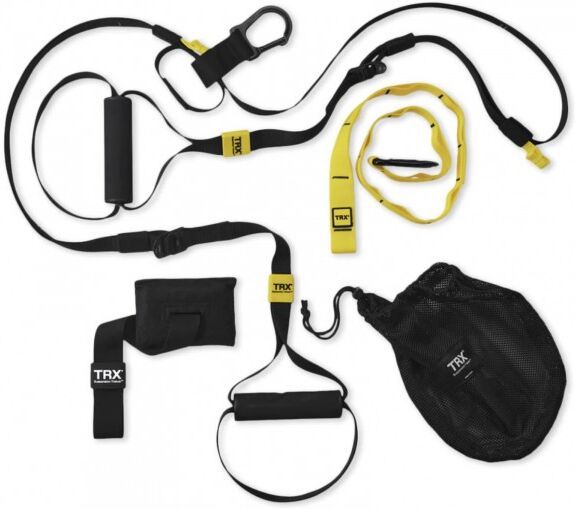
TRX MOVE Suspension TrainerJoin the fitness revolution! TRX has been changing the face of the fitness industry for over two decades with their suspension training systems. Now, with the TRX Move, you can introduce suspension training to your workouts. Suspension training allows you to use your body weight for a huge amount...107,10 £*Shipping: 0,00 £Secure redirect to the provider
-
BenchK RECOIL Suspension TrainerINTRODUCING THE RECOIL SUSPENSION TRAINER The BenchK RECOIL is a suspension trainer that lets you train anywhere, with secure anchoring and an easy-to-adjust length. Train your entire body at the gym, at home, or even outdoors in just a few seconds.The RECOIL has a massive adjustment range and...323,10 £*Shipping: 0,00 £Secure redirect to the provider
-
How can one reach the kinematic relationship 3?
To reach the kinematic relationship 3, one can use the principles of kinematics to analyze the motion of objects. This involves studying the position, velocity, and acceleration of the objects and using equations and formulas to establish the relationships between these variables. Additionally, one can use graphical methods, such as velocity-time and position-time graphs, to visualize and understand the kinematic relationships. Finally, conducting experiments and collecting data can help to validate and confirm the kinematic relationships. **
-
What is the solution method for kinematic problems in physics?
The solution method for kinematic problems in physics involves using the equations of motion to analyze the motion of an object. These equations include the equations for constant velocity, constant acceleration, and projectile motion. By identifying the known and unknown variables, such as initial velocity, final velocity, acceleration, displacement, and time, we can use the appropriate equation to solve for the unknown variable. It is important to carefully consider the given information and choose the correct equation to use in order to accurately solve kinematic problems in physics. **
-
Can you help me with a kinematic problem in physics?
Yes, I can help you with a kinematic problem in physics. Kinematics deals with the motion of objects without considering the forces that cause the motion. If you provide me with the specific details of the problem, such as the initial and final positions, velocities, accelerations, and time, I can help you solve for the unknown quantities using the kinematic equations. Feel free to ask me any specific questions you have about the problem, and I'll do my best to assist you. **
-
Could someone explain or break down the transformation of this kinematic formula for me?
Sure! The kinematic formula that describes the relationship between initial velocity (u), final velocity (v), acceleration (a), and displacement (s) is given by the equation: v^2 = u^2 + 2as. This formula can be derived from the equations of motion by using the equation v = u + at and the equation s = ut + (1/2)at^2. By substituting the expression for t from the first equation into the second equation and then substituting the resulting expression for s into the equation v = u + at, we can arrive at the kinematic formula v^2 = u^2 + 2as. This formula is commonly used to solve problems involving motion under constant acceleration. **
* All prices are inclusive of VAT and, if applicable, plus shipping costs. The offer information is based on the details provided by the respective shop and is updated through automated processes. Real-time updates do not occur, so deviations can occur in individual cases. ** Note: Parts of this content were created by AI.