Buy gt3treff.eu ?
We are moving the project
gt3treff.eu .
Are you interested in purchasing the domain
gt3treff.eu ?
domain@kv-gmbh.de · 0541-91531010
Buy gt3treff.eu ?
What are the differences between covalent bonds, metallic bonds, and ionic bonds?
Covalent bonds are formed when two atoms share electrons, resulting in a strong bond between the atoms. Metallic bonds occur between metal atoms, where the electrons are delocalized and free to move throughout the structure, creating a strong bond. Ionic bonds are formed between a metal and a nonmetal, where one atom transfers electrons to the other, resulting in the formation of positively and negatively charged ions that are attracted to each other. Overall, covalent bonds involve electron sharing, metallic bonds involve electron delocalization, and ionic bonds involve electron transfer. **
Do CO bonds form with other CO bonds?
No, CO bonds do not typically form with other CO bonds. Carbon monoxide (CO) is a stable molecule with a triple bond between the carbon and oxygen atoms. This triple bond is strong and does not readily form additional bonds with other CO molecules. Instead, CO molecules tend to interact with other types of molecules through various types of chemical reactions. **


Similar search terms for Bonds
Top-Angebote
Products related to Bonds:
-
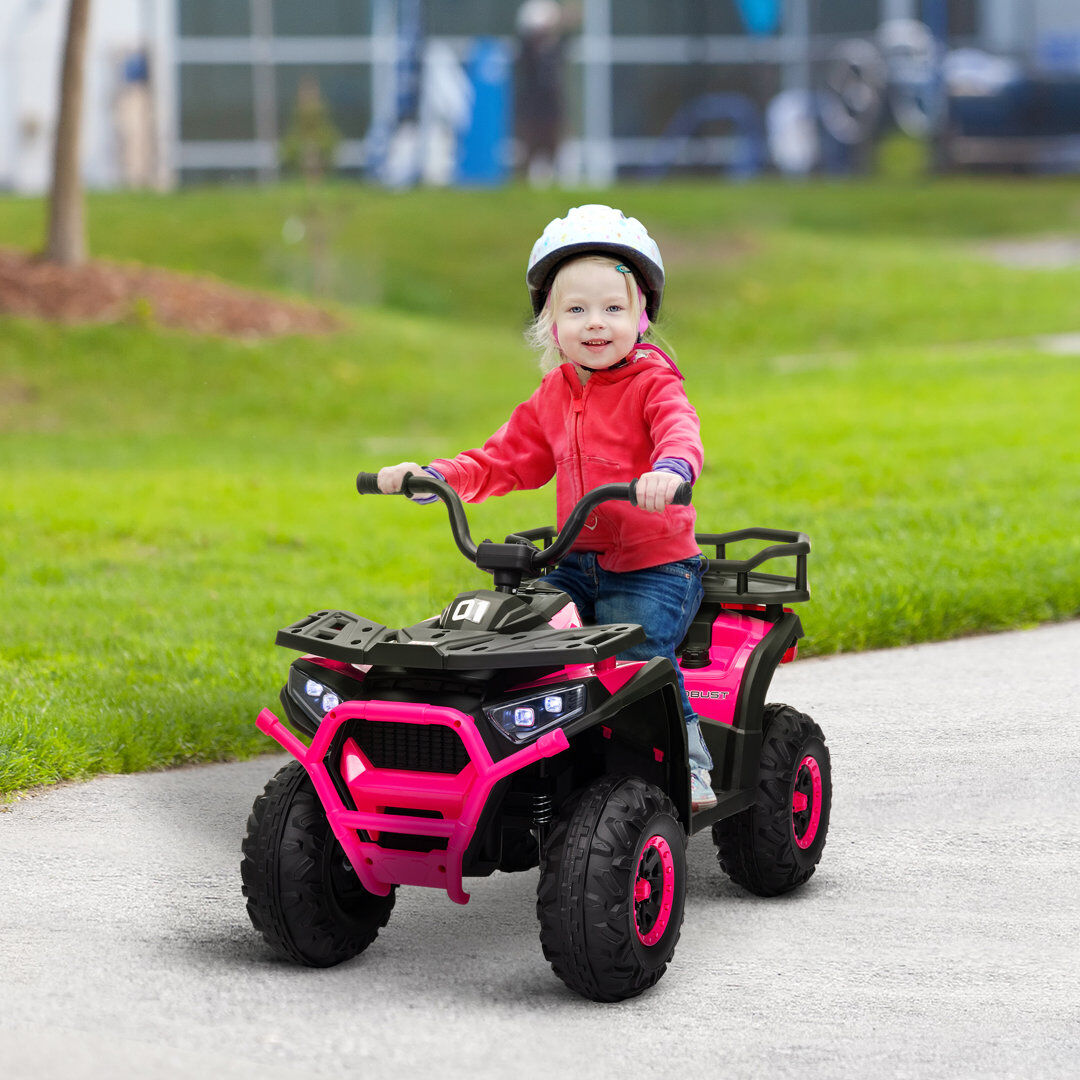
HOMCOM AIYAPLAY 12V Kids Quad Bike w/ 4 Suspension Wheels, for 3-5 Years Pink 1Explore the great outdoors with the AIYAPLAY kids quad bike! Tackle any terrain, from grass to asphalt, with its robust treaded wheels and suspension. Plus, a handy storage basket at the back keeps toys, snacks and other essentials close. Adventure awaits at the push of a pedal, with speeds up to 6km/h. ● Treaded wheels with suspension for smooth rides on different terrains; ● Back basket for keeping toys and other essentials; ● Foot pedal accelerator allows speeds between 3-6km/h; ● Equipped with four headlights, music and a USB port for entertainment; ● Two 12V motors support forward and reverse functions; ● Realistic features foster imagination and adventurous play; ● Assembly required; ●Colour: Yellow; ● Material: Plastic and metal; ● Overall dimensions: 57.5H x 88L x 50Wcm; ● Seat: 22.5W x 11Dcm; ● Seat height: To floor: 33cm; ● Battery: 12V 4.5AH; ● Motor: 2 x 12V, 25W; ● First charge: 6-8 hours. Regular charge: 8-12 hours; ●Run time: 45 minutes; ● Speed: 3-6km/h; ● Weight capacity: 30kg; ● Approved age: 3 years; ● Recommended age: 3-5 years; ● Seat capacity: One rider; ● Item label: 370-377V70YL; ● Always monitory your child while they are riding; ● Kids must wear a helmet while driving; HOMCOM Colour: Pink112,99 £*Shipping: 0,00 £Secure redirect to the provider
-
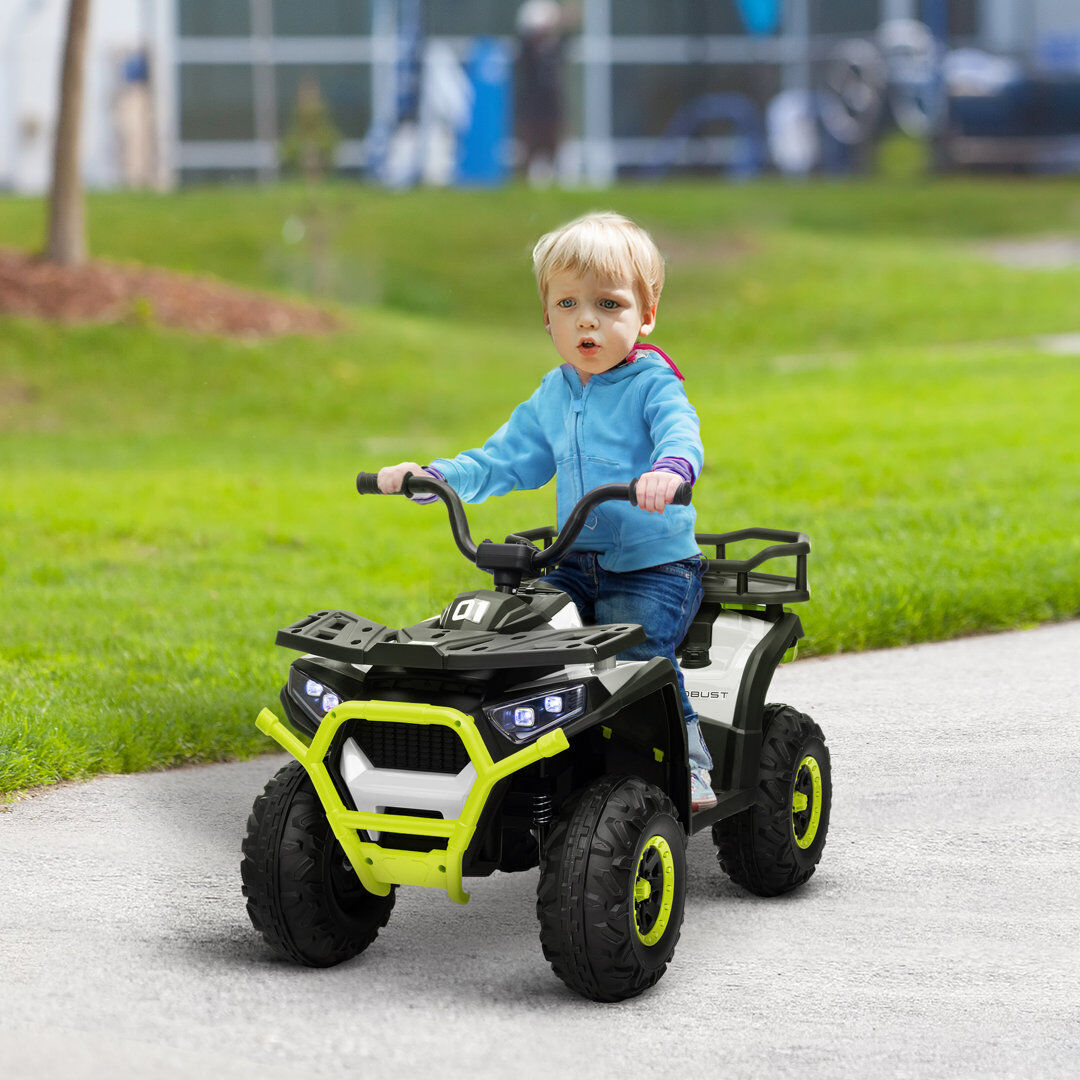
HOMCOM AIYAPLAY 12V Kids Quad Bike w/ 4 Suspension Wheels, for 3-5 Years Green 1Explore the great outdoors with the AIYAPLAY kids quad bike! Tackle any terrain, from grass to asphalt, with its robust treaded wheels and suspension. Plus, a handy storage basket at the back keeps toys, snacks and other essentials close. Adventure awaits at the push of a pedal, with speeds up to 6km/h. ● Treaded wheels with suspension for smooth rides on different terrains; ● Back basket for keeping toys and other essentials; ● Foot pedal accelerator allows speeds between 3-6km/h; ● Equipped with four headlights, music and a USB port for entertainment; ● Two 12V motors support forward and reverse functions; ● Realistic features foster imagination and adventurous play; ● Assembly required; ●Colour: Yellow; ● Material: Plastic and metal; ● Overall dimensions: 57.5H x 88L x 50Wcm; ● Seat: 22.5W x 11Dcm; ● Seat height: To floor: 33cm; ● Battery: 12V 4.5AH; ● Motor: 2 x 12V, 25W; ● First charge: 6-8 hours. Regular charge: 8-12 hours; ●Run time: 45 minutes; ● Speed: 3-6km/h; ● Weight capacity: 30kg; ● Approved age: 3 years; ● Recommended age: 3-5 years; ● Seat capacity: One rider; ● Item label: 370-377V70YL; ● Always monitory your child while they are riding; ● Kids must wear a helmet while driving; HOMCOM Colour: Green95,99 £*Shipping: 0,00 £Secure redirect to the provider
-
Ivy Bronx AIYAPLAY 12V Aston Martin Licensed Electric Go Kart w/ 4 Suspension Wheels Green 1Zoom into fun with the Aston Martin Cognizant Aramco F1 Team AMR23 Licensed 12V go kart! Feel the thrill with its strong power and smooth ride on brick roads or short grass. Opt for remote control or let your child take the wheel, enjoying speeds up to 5 km/h, complete with interactive horn, music and lights. Ivy Bronx143,99 £*Shipping: 0,00 £Secure redirect to the provider
-
HOMCOM AIYAPLAY 12V Kids Quad Bike w/ 4 Suspension Wheels, for 3-5 Years Yellow 1Explore the great outdoors with the AIYAPLAY kids quad bike! Tackle any terrain, from grass to asphalt, with its robust treaded wheels and suspension. Plus, a handy storage basket at the back keeps toys, snacks and other essentials close. Adventure awaits at the push of a pedal, with speeds up to 6km/h. ● Treaded wheels with suspension for smooth rides on different terrains; ● Back basket for keeping toys and other essentials; ● Foot pedal accelerator allows speeds between 3-6km/h; ● Equipped with four headlights, music and a USB port for entertainment; ● Two 12V motors support forward and reverse functions; ● Realistic features foster imagination and adventurous play; ● Assembly required; ●Colour: Yellow; ● Material: Plastic and metal; ● Overall dimensions: 57.5H x 88L x 50Wcm; ● Seat: 22.5W x 11Dcm; ● Seat height: To floor: 33cm; ● Battery: 12V 4.5AH; ● Motor: 2 x 12V, 25W; ● First charge: 6-8 hours. Regular charge: 8-12 hours; ●Run time: 45 minutes; ● Speed: 3-6km/h; ● Weight capacity: 30kg; ● Approved age: 3 years; ● Recommended age: 3-5 years; ● Seat capacity: One rider; ● Item label: 370-377V70YL; ● Always monitory your child while they are riding; ● Kids must wear a helmet while driving; HOMCOM Colour: Yellow97,99 £*Shipping: 0,00 £Secure redirect to the provider


-
Why are intermolecular bonds weaker than electron pair bonds?
Intermolecular bonds are weaker than electron pair bonds because they involve interactions between molecules rather than within a single molecule. In intermolecular bonds, the attractive forces between molecules are generally weaker than the covalent bonds that hold atoms together within a molecule. Additionally, intermolecular bonds are typically temporary and can be easily broken, whereas electron pair bonds are strong and stable. Overall, the weaker nature of intermolecular bonds allows molecules to move and interact with each other more freely. **
-
Why are intermolecular bonds generally weaker than covalent bonds?
Intermolecular bonds are generally weaker than covalent bonds because they involve interactions between molecules rather than within a single molecule. Covalent bonds involve the sharing of electrons between atoms, creating strong bonds within a molecule. In contrast, intermolecular bonds, such as hydrogen bonds or van der Waals forces, are weaker because they are based on temporary interactions between molecules, which can be easily broken. Additionally, intermolecular bonds are influenced by factors such as distance and orientation, further contributing to their weaker nature compared to covalent bonds. **
-
Why are intermolecular bonds typically weaker than covalent bonds?
Intermolecular bonds are typically weaker than covalent bonds because they involve interactions between molecules rather than within a single molecule. In intermolecular bonds, the attractive forces between molecules, such as van der Waals forces or hydrogen bonding, are weaker than the strong sharing of electrons in covalent bonds. Additionally, intermolecular bonds are more easily broken or disrupted by changes in temperature or pressure, leading to lower bond energies compared to covalent bonds. **
-
Why are intermolecular bonds typically weaker than electron pair bonds?
Intermolecular bonds are typically weaker than electron pair bonds because they involve interactions between molecules rather than within a single molecule. In intermolecular bonds, the attractive forces between molecules are generally weaker than the covalent bonds that hold atoms together within a molecule. Additionally, intermolecular bonds are usually based on weaker forces such as van der Waals forces, hydrogen bonding, or dipole-dipole interactions, which are not as strong as the sharing or transfer of electrons in covalent or ionic bonds. **


Why are intermolecular bonds generally weaker than electron pair bonds?
Intermolecular bonds are generally weaker than electron pair bonds because they involve interactions between molecules, which are larger and less localized than the interactions between atoms in a covalent bond. In intermolecular bonds, the attractive forces are typically weaker due to the larger distance between molecules and the lack of direct sharing of electrons. In contrast, electron pair bonds involve the sharing of electrons between atoms, leading to stronger and more localized bonding interactions. **
Why are polar bonds lower in energy than nonpolar bonds?
Polar bonds are lower in energy than nonpolar bonds because they involve the unequal sharing of electrons between two atoms with different electronegativities. This unequal sharing creates a dipole moment, which results in an attractive force between the partially positive and partially negative ends of the molecule. This electrostatic attraction lowers the overall energy of the molecule compared to nonpolar bonds, where electrons are shared equally. As a result, polar bonds are typically stronger and more stable than nonpolar bonds. **
Top-Angebote
Products related to Bonds:
-
Inspired Finds Eternal Bonds Personalized Acrylic Photo Frame & Custom Couple Plaque Gift warm LightCapture Your Timeless Connection. Turn your most meaningful moments into a lasting keepsake with this elegant personalized acrylic photo frame. Designed specifically for couples who value memories that matter, this sleek, transparent display piece...110,99 $*Shipping: 0,00 $Secure redirect to the provider
-
Oniverse Racing Wheels For Nintendo Switch 2 Joy-Con - 4 Pack (Blue, Orange, Purple, Green)About this productRelease date: 13 June 2025. Introducing a 4-in-1 pack featuring four racing wheels for Nintendo Switch controllers, designed to enhance your gaming experience and provide immersive gameplay! The pack includes wheels in four vibrant colours: Blue, Orange, Purple, and Green. SL and SR buttons are easily accessible on the wheel. A felt-lined notch ensures an improved grip. Quick and easy removal is facilitated by access at the back of the wheel. Size H8, W15, D27cm. Manufacturer's15,49 £*Shipping: 0,00 £Secure redirect to the provider
-
HOMCOM AIYAPLAY 12V Kids Quad Bike w/ 4 Suspension Wheels, for 3-5 Years Pink 1Explore the great outdoors with the AIYAPLAY kids quad bike! Tackle any terrain, from grass to asphalt, with its robust treaded wheels and suspension. Plus, a handy storage basket at the back keeps toys, snacks and other essentials close. Adventure awaits at the push of a pedal, with speeds up to 6km/h. ● Treaded wheels with suspension for smooth rides on different terrains; ● Back basket for keeping toys and other essentials; ● Foot pedal accelerator allows speeds between 3-6km/h; ● Equipped with four headlights, music and a USB port for entertainment; ● Two 12V motors support forward and reverse functions; ● Realistic features foster imagination and adventurous play; ● Assembly required; ●Colour: Yellow; ● Material: Plastic and metal; ● Overall dimensions: 57.5H x 88L x 50Wcm; ● Seat: 22.5W x 11Dcm; ● Seat height: To floor: 33cm; ● Battery: 12V 4.5AH; ● Motor: 2 x 12V, 25W; ● First charge: 6-8 hours. Regular charge: 8-12 hours; ●Run time: 45 minutes; ● Speed: 3-6km/h; ● Weight capacity: 30kg; ● Approved age: 3 years; ● Recommended age: 3-5 years; ● Seat capacity: One rider; ● Item label: 370-377V70YL; ● Always monitory your child while they are riding; ● Kids must wear a helmet while driving; HOMCOM Colour: Pink112,99 £*Shipping: 0,00 £Secure redirect to the provider
-
HOMCOM AIYAPLAY 12V Kids Quad Bike w/ 4 Suspension Wheels, for 3-5 Years Green 1Explore the great outdoors with the AIYAPLAY kids quad bike! Tackle any terrain, from grass to asphalt, with its robust treaded wheels and suspension. Plus, a handy storage basket at the back keeps toys, snacks and other essentials close. Adventure awaits at the push of a pedal, with speeds up to 6km/h. ● Treaded wheels with suspension for smooth rides on different terrains; ● Back basket for keeping toys and other essentials; ● Foot pedal accelerator allows speeds between 3-6km/h; ● Equipped with four headlights, music and a USB port for entertainment; ● Two 12V motors support forward and reverse functions; ● Realistic features foster imagination and adventurous play; ● Assembly required; ●Colour: Yellow; ● Material: Plastic and metal; ● Overall dimensions: 57.5H x 88L x 50Wcm; ● Seat: 22.5W x 11Dcm; ● Seat height: To floor: 33cm; ● Battery: 12V 4.5AH; ● Motor: 2 x 12V, 25W; ● First charge: 6-8 hours. Regular charge: 8-12 hours; ●Run time: 45 minutes; ● Speed: 3-6km/h; ● Weight capacity: 30kg; ● Approved age: 3 years; ● Recommended age: 3-5 years; ● Seat capacity: One rider; ● Item label: 370-377V70YL; ● Always monitory your child while they are riding; ● Kids must wear a helmet while driving; HOMCOM Colour: Green95,99 £*Shipping: 0,00 £Secure redirect to the provider
-
What are the differences between covalent bonds, metallic bonds, and ionic bonds?
Covalent bonds are formed when two atoms share electrons, resulting in a strong bond between the atoms. Metallic bonds occur between metal atoms, where the electrons are delocalized and free to move throughout the structure, creating a strong bond. Ionic bonds are formed between a metal and a nonmetal, where one atom transfers electrons to the other, resulting in the formation of positively and negatively charged ions that are attracted to each other. Overall, covalent bonds involve electron sharing, metallic bonds involve electron delocalization, and ionic bonds involve electron transfer. **
-
Do CO bonds form with other CO bonds?
No, CO bonds do not typically form with other CO bonds. Carbon monoxide (CO) is a stable molecule with a triple bond between the carbon and oxygen atoms. This triple bond is strong and does not readily form additional bonds with other CO molecules. Instead, CO molecules tend to interact with other types of molecules through various types of chemical reactions. **
-
Why are intermolecular bonds weaker than electron pair bonds?
Intermolecular bonds are weaker than electron pair bonds because they involve interactions between molecules rather than within a single molecule. In intermolecular bonds, the attractive forces between molecules are generally weaker than the covalent bonds that hold atoms together within a molecule. Additionally, intermolecular bonds are typically temporary and can be easily broken, whereas electron pair bonds are strong and stable. Overall, the weaker nature of intermolecular bonds allows molecules to move and interact with each other more freely. **
-
Why are intermolecular bonds generally weaker than covalent bonds?
Intermolecular bonds are generally weaker than covalent bonds because they involve interactions between molecules rather than within a single molecule. Covalent bonds involve the sharing of electrons between atoms, creating strong bonds within a molecule. In contrast, intermolecular bonds, such as hydrogen bonds or van der Waals forces, are weaker because they are based on temporary interactions between molecules, which can be easily broken. Additionally, intermolecular bonds are influenced by factors such as distance and orientation, further contributing to their weaker nature compared to covalent bonds. **
Similar search terms for Bonds
-
Ivy Bronx AIYAPLAY 12V Aston Martin Licensed Electric Go Kart w/ 4 Suspension Wheels Green 1Zoom into fun with the Aston Martin Cognizant Aramco F1 Team AMR23 Licensed 12V go kart! Feel the thrill with its strong power and smooth ride on brick roads or short grass. Opt for remote control or let your child take the wheel, enjoying speeds up to 5 km/h, complete with interactive horn, music and lights. Ivy Bronx143,99 £*Shipping: 0,00 £Secure redirect to the provider
-
HOMCOM AIYAPLAY 12V Kids Quad Bike w/ 4 Suspension Wheels, for 3-5 Years Yellow 1Explore the great outdoors with the AIYAPLAY kids quad bike! Tackle any terrain, from grass to asphalt, with its robust treaded wheels and suspension. Plus, a handy storage basket at the back keeps toys, snacks and other essentials close. Adventure awaits at the push of a pedal, with speeds up to 6km/h. ● Treaded wheels with suspension for smooth rides on different terrains; ● Back basket for keeping toys and other essentials; ● Foot pedal accelerator allows speeds between 3-6km/h; ● Equipped with four headlights, music and a USB port for entertainment; ● Two 12V motors support forward and reverse functions; ● Realistic features foster imagination and adventurous play; ● Assembly required; ●Colour: Yellow; ● Material: Plastic and metal; ● Overall dimensions: 57.5H x 88L x 50Wcm; ● Seat: 22.5W x 11Dcm; ● Seat height: To floor: 33cm; ● Battery: 12V 4.5AH; ● Motor: 2 x 12V, 25W; ● First charge: 6-8 hours. Regular charge: 8-12 hours; ●Run time: 45 minutes; ● Speed: 3-6km/h; ● Weight capacity: 30kg; ● Approved age: 3 years; ● Recommended age: 3-5 years; ● Seat capacity: One rider; ● Item label: 370-377V70YL; ● Always monitory your child while they are riding; ● Kids must wear a helmet while driving; HOMCOM Colour: Yellow97,99 £*Shipping: 0,00 £Secure redirect to the provider
-
NADAAL STUDIOS Nerina Office Chair, Vegan Leather & Performance Fabric, Swivel, Caster Wheels, BlackThe Nerina Office Chair by Nadaal Studios blends sleek form with everyday function. Upholstered in smooth black vegan leather, it features a gently curved back, padded seat, and seamless swivel motion for all-day comfort.529,00 $*Shipping: 0,00 $Secure redirect to the provider
-
AE V94367 Exhaust valveSupplementary Article / Supplementary Info Info 2: Chromed valve stem, Stellite covered valve seat; Length [mm]: 102; Valve Stem Diameter [mm]: 5,94; Valve Head Diameter [mm]: 26; Valve seat angle [°]: 45; Material: Chrome-Mangan-Nickel Steel; TecDoc Engine Number: 25169, 26893, 42541, 742, 9505; Engine Code: A16DMS7,59 £*Shipping: 8,45 £Secure redirect to the provider
-
Why are intermolecular bonds typically weaker than covalent bonds?
Intermolecular bonds are typically weaker than covalent bonds because they involve interactions between molecules rather than within a single molecule. In intermolecular bonds, the attractive forces between molecules, such as van der Waals forces or hydrogen bonding, are weaker than the strong sharing of electrons in covalent bonds. Additionally, intermolecular bonds are more easily broken or disrupted by changes in temperature or pressure, leading to lower bond energies compared to covalent bonds. **
-
Why are intermolecular bonds typically weaker than electron pair bonds?
Intermolecular bonds are typically weaker than electron pair bonds because they involve interactions between molecules rather than within a single molecule. In intermolecular bonds, the attractive forces between molecules are generally weaker than the covalent bonds that hold atoms together within a molecule. Additionally, intermolecular bonds are usually based on weaker forces such as van der Waals forces, hydrogen bonding, or dipole-dipole interactions, which are not as strong as the sharing or transfer of electrons in covalent or ionic bonds. **
-
Why are intermolecular bonds generally weaker than electron pair bonds?
Intermolecular bonds are generally weaker than electron pair bonds because they involve interactions between molecules, which are larger and less localized than the interactions between atoms in a covalent bond. In intermolecular bonds, the attractive forces are typically weaker due to the larger distance between molecules and the lack of direct sharing of electrons. In contrast, electron pair bonds involve the sharing of electrons between atoms, leading to stronger and more localized bonding interactions. **
-
Why are polar bonds lower in energy than nonpolar bonds?
Polar bonds are lower in energy than nonpolar bonds because they involve the unequal sharing of electrons between two atoms with different electronegativities. This unequal sharing creates a dipole moment, which results in an attractive force between the partially positive and partially negative ends of the molecule. This electrostatic attraction lowers the overall energy of the molecule compared to nonpolar bonds, where electrons are shared equally. As a result, polar bonds are typically stronger and more stable than nonpolar bonds. **
* All prices are inclusive of VAT and, if applicable, plus shipping costs. The offer information is based on the details provided by the respective shop and is updated through automated processes. Real-time updates do not occur, so deviations can occur in individual cases. ** Note: Parts of this content were created by AI.